Introduction to a Fragrance Revolution
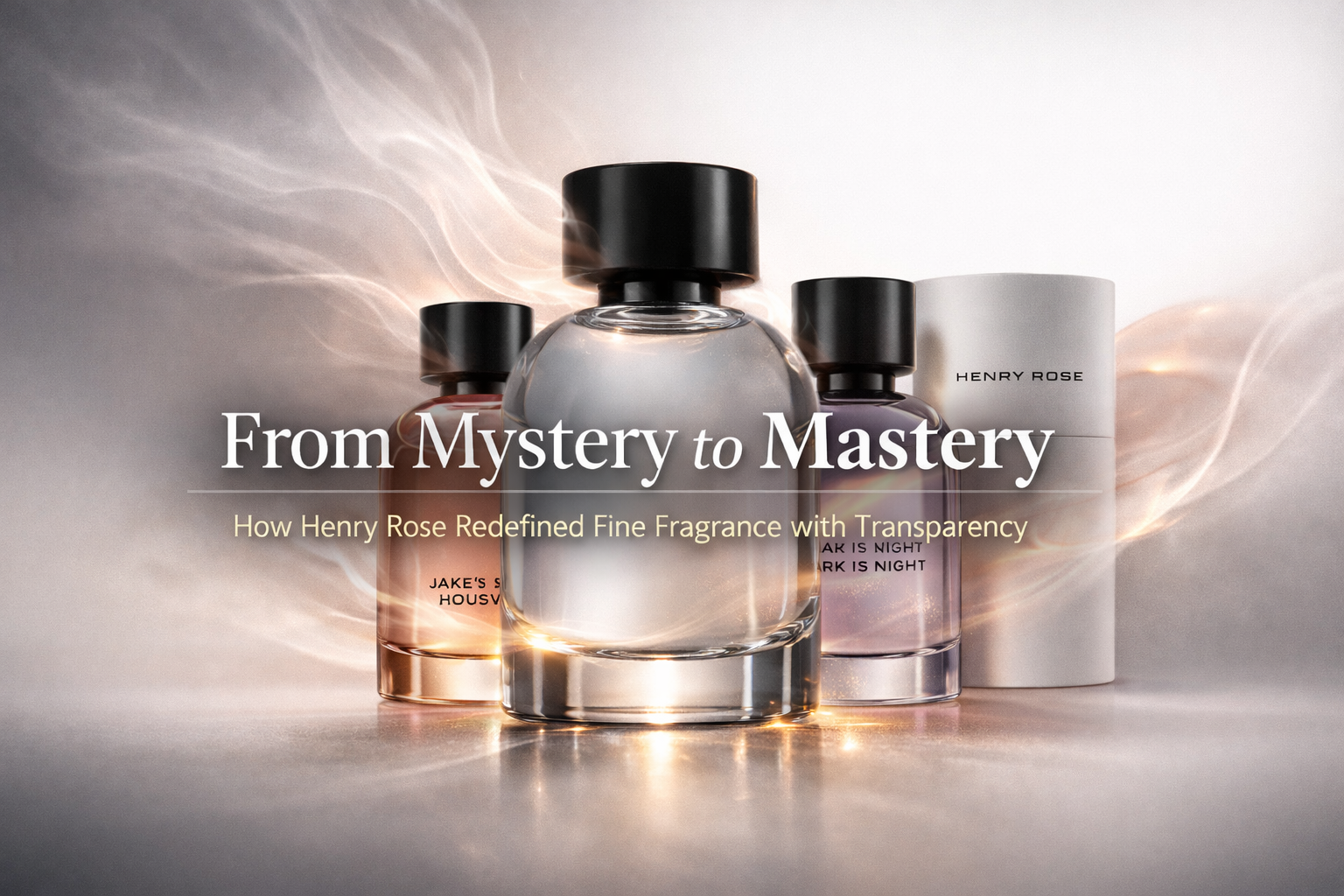
Henry Rose is the definitive answer to a question the fragrance industry ignored for decades: What are we actually putting on our skin? For a century, fine fragrance felt like a locked room—elegant, mysterious, and intentionally untouchable. You smelled something amazing, fell in love instantly, and were told that the “magic” lived in the secrecy of the proprietary formula.
But times changed. The modern consumer replaced blind trust with radical curiosity, and that curiosity didn’t just knock—it cracked the door wide open. By removing the “black box” of traditional perfumery, Henry Rose has proven that transparency isn’t just a safety standard; it is the new height of luxury.
The Problem with Traditional Perfume
Traditional perfume has long been celebrated for its elegance, artistry, and sense of mystery. Luxurious bottles, poetic marketing, and iconic scent profiles shaped the industry for decades. But beneath that beauty lies a system that hasn’t always served the modern consumer. The problem isn’t the craft itself—it’s the lack of openness surrounding it.
At the core of the issue is secrecy. Most traditional perfumes list “fragrance” or “parfum” as a single ingredient, even though it can represent a complex blend of dozens or even hundreds of components. While this practice protects formulas, it also keeps consumers in the dark. People are asked to trust without being informed, which feels increasingly outdated in today’s ingredient-aware world.
Another challenge is accessibility. Traditional perfume culture often feels exclusive and intimidating, built around rigid rules—who a scent is for, when it should be worn, and what it should say about you. This approach can distance consumers instead of inviting them in, turning fragrance into a status symbol rather than a personal experience.
There’s also the issue of alignment with modern values. As consumers became more conscious about health, sustainability, and ethics, traditional perfume largely remained unchanged. While skincare and wellness evolved rapidly, fragrance lagged behind, creating a disconnect between consumer expectations and industry practices.
The problem with traditional perfume isn’t that it lacks beauty or creativity—it’s that it relied too heavily on mystery in an era that values clarity. This gap set the stage for brands like Henry Rose to step in, question the norms, and reimagine what fine fragrance could look like in a transparent, modern world.


Why Consumers Started Asking Questions
Consumers started asking questions because their relationship with products began to change. What was once accepted without thought—ingredients, sourcing, and safety—suddenly mattered. As people became more informed about what they put in their bodies and on their skin, blind trust was replaced with curiosity. Fragrance, once untouched by scrutiny, became impossible to ignore.
The clean beauty movement played a major role in this shift. Skincare and cosmetics brands began openly listing ingredients, explaining formulations, and highlighting safety standards. Consumers grew used to reading labels and making informed choices. When they looked at perfume bottles and saw only the word “fragrance,” it felt like a step backward.
Health awareness also contributed to the growing curiosity. People with sensitivities, allergies, or lifestyle preferences wanted to understand what they were exposed to daily. Since fragrance is often applied directly to pulse points and worn for hours, the lack of information raised valid concerns. The question wasn’t about fear—it was about informed choice.
Social media and digital access amplified these questions. Information became easier to share, and conversations around transparency gained momentum. Consumers realized they weren’t alone in wanting clarity. What started as individual curiosity quickly turned into a collective demand for honesty.
Ultimately, consumers began asking questions because they expected more respect. They wanted brands to meet them where they were—aware, thoughtful, and engaged. This shift in mindset created the perfect moment for Henry Rose to step forward and offer answers where the industry had remained silent.
The Birth of Henry Rose
The birth of Henry Rose wasn’t a lucky accident or a trend-driven launch—it was a deliberate response to a long-standing gap in the fragrance world. While skincare and cosmetics had already begun embracing transparency, fine fragrance was still hiding behind tradition and secrecy. Henry Rose emerged to challenge that norm head-on.
At the heart of the brand’s creation was a simple but powerful realization: fragrance is worn directly on the skin every day, yet consumers knew almost nothing about what it contained. That contradiction didn’t sit right. The idea behind Henry Rose was to build a fine fragrance house that treated ingredient transparency as a responsibility, not a risk.
From day one, the mission was clear—create luxurious, emotionally rich fragrances without hiding behind the vague term “parfum.” This meant rethinking everything: formulation, sourcing, testing, and even how fragrance is talked about. Instead of leaning on mystique, Henry Rose chose education and honesty.
The name Henry Rose itself reflects this philosophy. It feels personal, classic, and human—more like a family name than a fashion label. That was intentional. The brand wanted to feel approachable and trustworthy, not intimidating or elitist. It signaled a move away from flashy branding toward substance and values.
Launching Henry Rose also meant navigating uncharted territory. Full ingredient disclosure in fine fragrance was almost unheard of, and achieving it required working closely with chemists, toxicologists, and master perfumers. Every formula had to meet strict safety standards without sacrificing depth, longevity, or artistry. It was slower, more expensive, and far more complex—but it set the foundation for everything that followed.
In essence, the birth of Henry Rose marked a quiet rebellion. It wasn’t about being louder than other brands—it was about being clearer. By choosing transparency at a time when secrecy was the norm, Henry Rose positioned itself not just as another fragrance brand, but as the beginning of a new chapter in modern perfumery.


Breaking the Mystery of Fine Fragrance
For decades, fine fragrance has been wrapped in an air of mystery. That mystery was part of the allure—ornate bottles, poetic descriptions, and an unspoken rule that you weren’t supposed to ask too many questions. You simply smelled, fell in love, and trusted the brand. But beneath that romance was a reality most consumers never saw.
In traditional perfumery, the word “fragrance” or “parfum” often serves as a catch-all term. It can represent dozens, sometimes hundreds, of individual ingredients, none of which need to be disclosed. While this practice protected proprietary formulas, it also created a wall between brands and the people wearing their products. The experience was beautiful, but it wasn’t transparent.
As consumers became more ingredient-conscious in skincare, food, and wellness, fragrance stood out as the last unexplored frontier. People started asking simple but important questions: What am I actually wearing? Is it safe? Why can’t I know what’s inside the bottle? These questions didn’t diminish the magic of fragrance—they challenged it to evolve.
Breaking the mystery doesn’t mean stripping fragrance of its artistry. Instead, it means redefining what luxury looks like in a modern world. Henry Rose approached this shift with a new perspective: that trust can be just as seductive as secrecy. By openly sharing every ingredient, the brand replaced uncertainty with confidence.
This shift also reframed how fragrance is experienced. When you understand what’s inside a scent, you connect with it differently. You’re no longer just reacting to how it smells in the moment—you’re building a relationship based on knowledge and comfort. The fragrance becomes part of your routine, not a question mark on your skin.
In breaking the mystery of fine fragrance, Henry Rose didn’t erase tradition—it refined it. The brand proved that elegance doesn’t depend on hidden information and that transparency can enhance, rather than diminish, the emotional power of scent. What was once a secretive art became an open conversation, and that openness changed the industry forever.
The Hidden Ingredients Issue
One of the biggest challenges in the world of fine fragrance has always been what consumers don’t see. Behind the elegant bottles and evocative scent names lies a long-standing practice of hiding ingredients under the single word “parfum.” While legally accepted, this practice has left many people unaware of what they are actually applying to their skin every day.
Unlike food or skincare, fragrance formulas have historically been protected as trade secrets. This meant brands were not required to disclose individual components, even though a single fragrance could contain dozens of synthetic and natural materials. For consumers, this created a trust gap. They were asked to believe in quality and safety without being given the information needed to make informed choices.
The issue became more noticeable as awareness around health, allergies, and sensitivities grew. People who carefully read labels on everything from moisturizer to shampoo suddenly realized that fragrance—often the most personal product in their routine—offered the least transparency. For some, this led to irritation or discomfort. For others, it simply felt outdated and unfair.
Hidden ingredients also limited accountability. When information isn’t shared, brands aren’t challenged to improve or innovate responsibly. The lack of disclosure protected formulas, but it also protected bad habits. Consumers had no way to distinguish between brands prioritizing safety and those simply following minimum regulations.
Addressing the hidden ingredients issue required more than a marketing tweak—it demanded a structural change in how fragrance was made and communicated. Henry Rose recognized that secrecy was no longer a strength. By choosing full ingredient transparency, the brand directly confronted the industry’s most ingrained habit and replaced it with openness.
By shedding light on what was once concealed, Henry Rose empowered consumers to trust again. The hidden ingredients issue wasn’t just about what was in the bottle—it was about respect. And solving it marked a turning point in redefining what modern, responsible luxury truly means.
The Myth of the “Clean” Compromise
Clean Without the Cliche: Forget everything you know about “natural” perfumes. Henry Rose proved that removing toxins doesn’t mean removing the soul of a scent.
The Gold Standard of Safety: Most brands hide behind “fragrance” on the label. Henry Rose leans into the strictest certifications on earth (EWG Verified and Cradle to Cradle) as a badge of honor, not a chore.
Radical Artistry: The Craft Behind the Transparency
The Architects of Olfactive Art: By partnering with legendary houses like IFF, they’ve proven that the world’s best noses don’t need “black box” secrets to create masterpieces.
Constraint as a Creative Spark: Like a chef creating a Michelin-star dish with limited ingredients, Henry Rose uses a restricted palette to create more intentional, sophisticated profiles.
Intentional From Soil to Skin: Every ingredient is a choice—sourced ethically, processed responsibly, and bottled with purpose.
The Modern Signature: Genderless & Personal
The Death of the Gendered Aisle: Fragrance is a feeling, not a binary. These scents aren’t for “him” or “her”—they are for the mood, the memory, and the individual.
Scent as a Second Skin: Instead of a heavy cloud that enters the room before you do, these fragrances are intimate. They evolve with your chemistry, becoming a quiet part of your identity.
Architectural Minimalism: The bottle design reflects the philosophy—no fluff, no unnecessary weight, just clear, timeless elegance.
The Ripple Effect: Reshaping an Empire
A Catalyst for Change: Henry Rose didn’t just launch a line; they launched a demand. They forced the giants of the industry to look in the mirror and question their own “proprietary” walls.
Scaling Without Selling Out: From a niche disruptor to a household name, the mission has remained the North Star. Growth hasn’t diluted the transparency; it has amplified it.
Why Henry Rose Matters Today
Henry Rose matters today because it reflects how the definition of luxury has changed. Modern consumers are no longer impressed by beautiful packaging alone—they want meaning, integrity, and honesty behind the products they use. In a world where information is power, Henry Rose stands out by willingly sharing it.
Fragrance is deeply personal. It sits on the skin, becomes part of daily rituals, and often holds emotional memories. Yet for years, people were expected to trust blindly. Henry Rose disrupted that dynamic by proving that transparency doesn’t weaken a brand—it strengthens it. By openly disclosing ingredients and prioritizing safety, the brand built trust in an industry where trust was rarely discussed.
Today’s buyers are more conscious than ever. They care about what they consume, how it’s made, and the values of the companies they support. Henry Rose aligns perfectly with this mindset. It bridges the gap between clean beauty and fine fragrance, showing that responsibility and refinement can coexist without compromise.
Beyond its products, Henry Rose matters because of its influence. It has raised expectations across the fragrance industry, encouraging other brands to rethink secrecy and reconsider how they communicate with consumers. Transparency is no longer a niche demand—it’s becoming a standard, and Henry Rose helped push that shift forward.
Ultimately, Henry Rose represents a new kind of luxury—one built on clarity, trust, and respect. In today’s world, where consumers value authenticity more than illusion, that approach isn’t just relevant. It’s essential.
Conclusion
Henry Rose’s journey from concept to cultural influence marks a defining moment in modern perfumery. By challenging the long-standing traditions of secrecy in fine fragrance, the brand proved that transparency and luxury are not opposites—they are powerful partners. What began as a response to unanswered questions became a blueprint for how fragrance can evolve without losing its soul.
Through full ingredient disclosure, clean standards, and uncompromising craftsmanship, Henry Rose transformed trust into the ultimate luxury. It shifted the focus from mystique to mastery, allowing consumers to feel confident, informed, and emotionally connected to the scents they wear.
In redefining what fine fragrance can be, Henry Rose didn’t just create beautiful perfumes—it changed expectations. And in doing so, it opened the door to a future where elegance is honest, beauty is responsible, and fragrance is something you can truly believe in.
Frequently Asked Questions
Q. What makes Henry Rose different from other fragrance brands?
A. Henry Rose fully discloses all ingredients and meets strict safety standards while maintaining luxury quality.
Q. Are Henry Rose fragrances considered clean?
A. Yes, they are independently certified and formulated with safety and transparency in mind.
Q. Are the scents gender-specific?
A. No. Henry Rose fragrances are designed to be worn by anyone.
Q. Does transparency affect scent quality?
A. Not at all. It challenges perfumers to be more creative, resulting in refined, elegant fragrances.
Q. Why is ingredient disclosure important in fragrance?
A. It builds trust, empowers consumers, and aligns fragrance with modern clean beauty values.
Review Additional Articles: Face the Future, Flawlessly: Your Skin’s Investment Guide to Long-Term Beauty